|
|
I'm all in favor of keeping dangerous weapons out of the hands of fools. Let's start with typewriters.
- Frank Lloyd Wright (1868-1959)
Today is Friday - April 26th, 2024
On This Day In History:
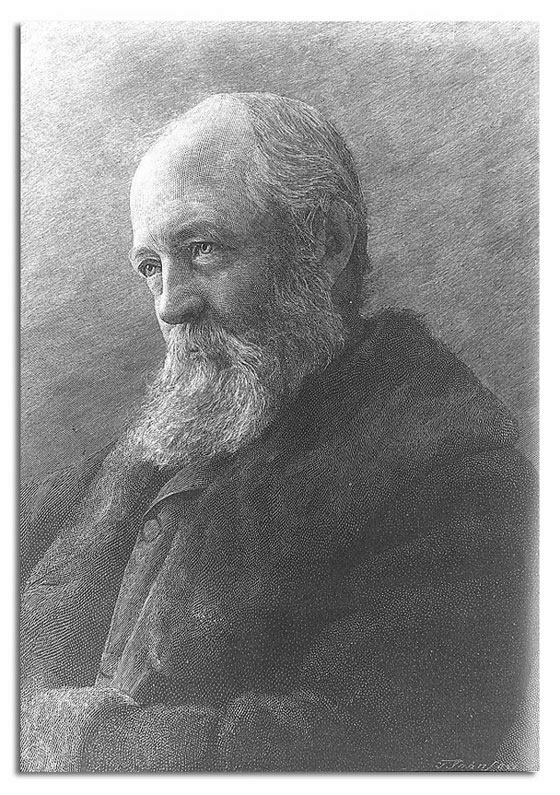
1822 - Frederick Law Olmsted ? Landscape Architect of New York's Central Park
Frederick Law Olmsted, nineteenth-century America's foremost landscape architect, was born on April 26, 1822. Son of a well-to-do Hartford, Connecticut merchant, Olmsted spent much of his childhood enjoying rural New England scenery. Weakened eyesight forced him to abandon plans to attend Yale. Instead, young Olmsted studied engineering and scientific farming, putting his agricultural and managerial theories into practice on his own Staten Island farm. A tour of England and the Continent inspired Walks and Talks of an American Farmer in England (1852) and a new career in journalism. Later that year, New York Daily Times editor Henry J. Raymond engaged Olmsted to report on conditions in the slave-holding states. His articles, later published as A Journey in the Seaboard Slave States, undercut prevailing myths about Southern aristocratic refinement with keen observations about the plantation system and its effects on master and slave. 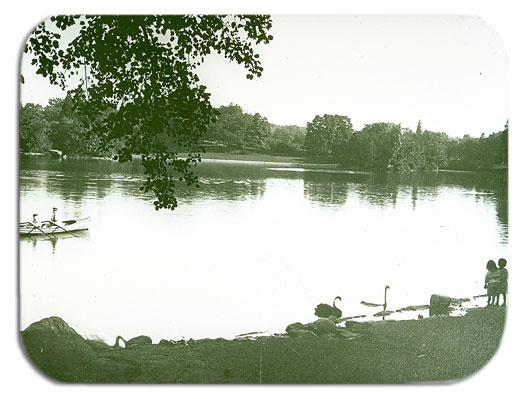
The Lake, Central Park
New York, New York. |
By the late 1850s, the publishing house Olmsted joined had gone bankrupt, disappointing his hopes for a literary life. Encouraged to apply for the superintendency of New York City's nascent Central Park, Olmsted embarked on a new career that tapped his considerable managerial skills and his knowledge of engineering and horticulture while providing an opportunity to recreate many of the beautiful landscape effects he had seen at home and abroad. Olmsted was engaged in clearing the 750-acre Manhattan site when architect Calvert Vaux suggested collaborating on a plan for the design competition. Their winning "Greensward Plan" allowed New Yorkers to experience a day in the country without leaving the island city. Creating this pastoral setting required shifting nearly 5 million cubic yards of dirt, blasting rock with 260 tons of gunpowder, and planting 270,000 trees and shrubs. Completed in 1864, visitors to Central Park still enjoy vistas across the sheep meadow, strolling along wooded paths, climbing The Ramble, and people watching on the terraces and promenades Olmsted and Vaux provided. The Greensward Plan included innovative transverse roads which allowed commuter and commercial traffic to pass through the park on lanes constructed below the grade of park thoroughfares. Equally thoughtful, Olmsted and Vaux provided ample but distinct pedestrian paths and carriage roads so visitors could move through the landscape without fear of collision.
|
Celebrating Birthdays Today:
|
What Happened on Your Special Day?
I became a fan of "today in history" information when I was very young. My father had a calendar that he had put together of "reasons to celebrate". If anybody asked "what are we celebrating?" my father could check his book and come up with a reason to celebrate for any day of the year. Charlie Chaplin's birthday, Buster Keaton's birthday, the anniversary of the opening of the Golden Gate Bridge, for every day of the year, my father's calendar had some interesting historical event that had occurred.
With this page I have tried to continue the tradition. Generally, I prefer to include birthdays and anniversaries of positive, uplifting, life affirming people and events that have had particular significance in my life. It's here because it was important to me.
I am trying to continually update with links from stories to other relevant sites. Check back regularly for a story on something interesting that happened on this day in history.
There are many, many, sites out there that have a lot of "this day in history" information. Many are not so great, full of inaccurate information and "negative vibes". However, there are a few that are really fabulous. Here are links to a few of my favorites. These sites feature "Today in History" stories for today, and some include archives that will enable you to look up information for any other date in history that is special to you:
This Day in History
The History Channel tells you what happened in Automotive, Civil War, Cold War, Crime, Entertainment, General Interest, Literary, Old West, Vietnam War, Wall Street, and World War II history for today or any day.
Life Magazine Covers
Life offers a look at covers from this day in history.
New York Times: On This Day
Lists events which occurred on each month and day of the year throughout history. Links to New York Times articles on the events when available.
Today in History
Stories and pictures from the American Memory historical collections of the U.S. Library of Congress.
The Internet Movie Database
The Internet Movie Database claims itself to be the biggest, best, most award-winning movie site on the planet. I'm not sure if it really is, but it is huge and has TONS of info on even the most obscure films, movies stars, directors, producers, etc. If it is motion picture related, you can probably find out something about it at this site.
|
|